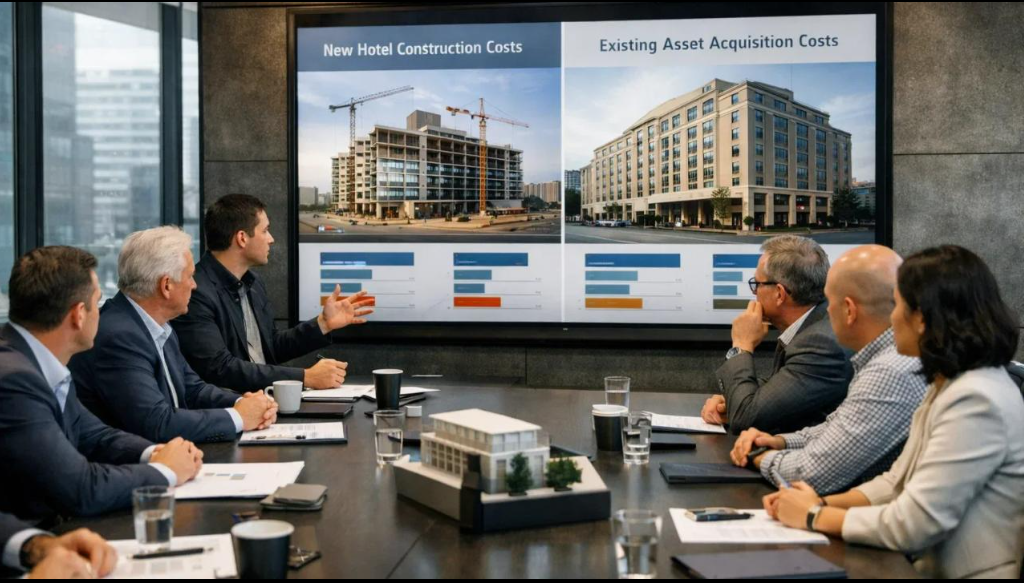
Investor feasibility studies help reduce risk, validate market demand, maximise returns, and make informed decisions before launching a successful venture. Starting a hotel is an interesting undertaking, but it cannot be considered successful if undertaken out of sheer excitement. Many good hospitality projects fail because some important decisions are made based on assumptions rather than facts. Regardless of whether you plan a boutique hotel, business hotel, eco-lodge, luxury resort, serviced apartment, or budget accommodation facility, conducting feasibility studies before construction or acquisition is one of the most profitable ventures you can undertake.
A feasibility study helps ascertain whether the hotel project planned is going to be financially feasible, sustainable, legal, and capable of satisfying market demands. This article discusses the necessary feasibility studies that every hotel investor needs to conduct before starting operations.
Investor Feasibility Studies: What Does It Mean?
A hotel feasibility study represents an in-depth examination of all factors that influence hotel profitability. These include market demand, competition, location, financial performance, legal issues, operational matters, and risk of investment.
The question a hotel feasibility study tries to answer is not “Can we build this hotel?” but rather the following:
“Should we build this hotel?”
Investor Feasibility Studies: Market Study
Each successful hotel starts with an understanding of the market.
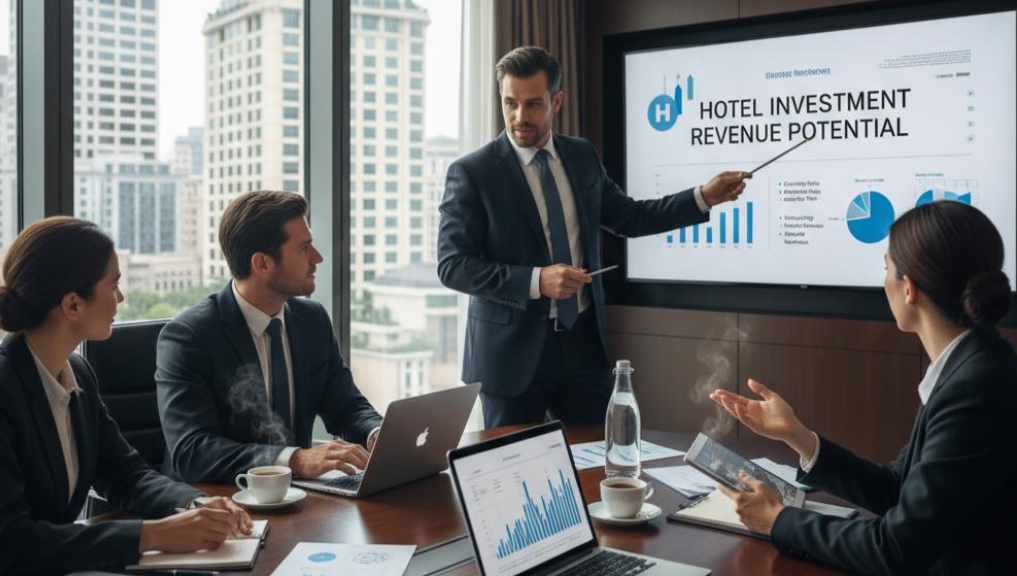
Market feasibility study analyses:
- Demand for leisure tourism and business travel
- Trends in business and leisure tourism demand
- Segmentation of target customers
- Fluctuations throughout the year
- Spending habits of tourists and visitors
- Occupancy levels and patterns
- Average Daily Rate (ADR)
- Revenue per Available Room (RevPAR)
Such a study will help to detect market gaps in the local accommodation sector. Read more…
For instance:
- Is there a need for a luxury hotel?
- Do we lack hotels for business travellers?
- Are conference facilities needed?
- Can service apartments operate better than usual hotel rooms?
The information on demand will prevent investors from creating unnecessary facilities.
Investor Feasibility Studies: Location Study
Location is still one of the most powerful factors influencing the success of any business in the hospitality industry.
Location analysis considers the following factors:
- Accessibility
- Road infrastructure
- Closest airport
- Public transport
- Security issues
- Visibility of hotel
- Parking facilities
- Future urban development plans
- Presence of interesting sites in the vicinity
- Proximity to corporate offices
- Proximity to universities
- Proximity to hospitals
- Proximity to government agencies
An excellent building in a wrong location usually performs poorly, while a not very good hotel in the right location can exceed expectations
Investor Feasibility Studies: Competitive Analysis
Any hotel investor needs to understand its competitors before entering the market.
Competitive analysis includes evaluation of:
- Existing hotels
- Hotel projects which will be opened soon
- Room supply
- Pricing
- Customer ratings and comments
- Positioning of brands
- Offered services
- Market shares
- Weaknesses and strengths of competitors
Hotel investors should ask themselves:
- Why do competitors succeed?
- Why do competitors fail?
- How will our hotel stand out from the competition?
Investor Feasibility Studies: Financial Analysis
This is perhaps the most important analysis of all.
A financial feasibility study includes an estimation of the following:
- Capital investment
- Construction cost
- Furniture, fixtures, and equipment (FF&E)
- Operating expenses
- Salaries and staffing costs
- Utilities
- Marketing cost
- Maintenance cost
- Revenue forecast
- Cash flow projection
- Gross margin
- Return on Investment (ROI)
- Breakeven point
- Internal rate of return (IRR)
- Net present value (NPV)
Investors need to know:
- How much capital do we need?
- When is our investment going to break even?
- How much time until profit is achieved?
- What occupancy is required to be profitable?
An accurate financial forecast will increase confidence and help in obtaining financing. Check out similar posts.
Investor Feasibility Studies: Technical Analysis
Technically attractive hotels may not be operationally efficient.
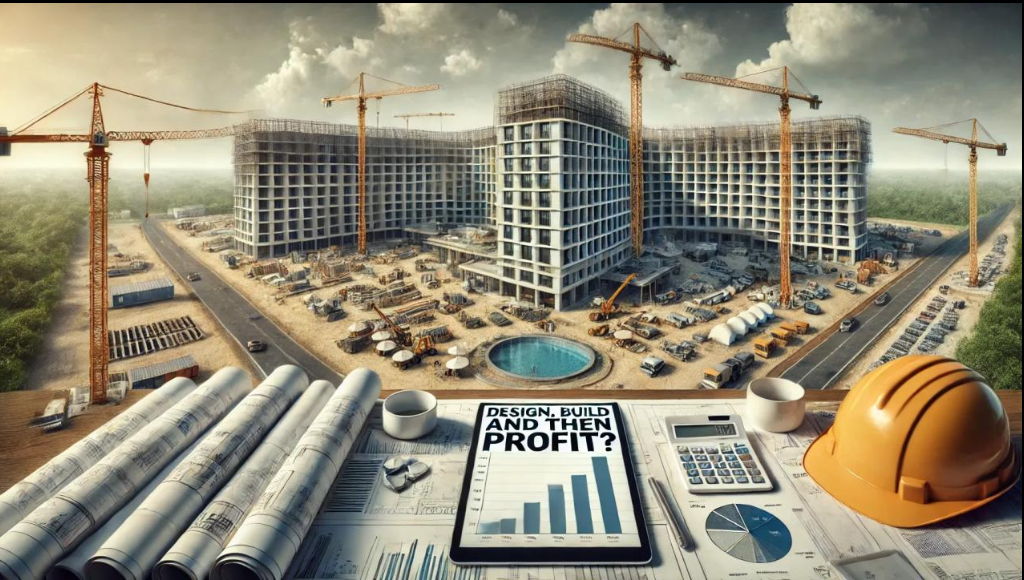
A technical feasibility analysis involves the following:
- Site suitability
- Architectural design
- Engineering considerations
- Construction techniques
- Utility accessibility
- Water supply
- Waste disposal
- Electricity requirement
- Internet facilities
- Fire safety systems
- Building technology
Furthermore, the analysis also considers whether the design facilitates hotel operational efficiency.
Legal and Regulatory Feasibility Analysis
Hospitality companies operate in a highly regulated environment.
A regulatory analysis takes into consideration the following:
- Land ownership
- Zoning laws
- Building approval
- Environmental laws
- Tourism laws
- Fire safety
- Health laws
- Food safety standards
- Labor law
- Tax laws
- Accessibility
Environmental and Sustainability Feasibility
Contemporary travellers prefer sustainable hospitality services.
Environmental evaluations involve:
- Environmental effects
- Consumption of water
- Effective use of energy
- Oppositions to renewable energy sources
- Waste management
- Carbon footprint
- Biodiversity conservation
- Resistance to climate change
Green hotel services often minimise operational costs as well as improve hotel image.
Sustainability is no longer seen as something extra—it is turning into an advantage.
Investor Feasibility Studies: Operational Study
Profitable hotels may still suffer from poor operations.
Operational feasibility considers:
- Staff requirements
- Human organization
- Departmental processes
- Standard Operating Procedures (SOP)
- Purchasing system
- Inventory control
- System requirements
- Property Management System (PMS)
- Customer service procedures
- Maintenance system
Such a study assesses the possibility of providing guests with a consistent experience.
Investor Feasibility Studies: Human Resources
Human beings are the core of every successful hotel.
HR assessment includes the following:
- Labor supply
- Skills gap
- Recruitment methods
- Training needs
- Salary comparison
- HR retention programs
- Labor requirement
Hotels with professional staff tend to have more satisfied guests and fewer staff turnovers.
Check out similar blog posts.
Investor Feasibility Studies: Marketing Study
No matter how beautiful a hotel is, it can’t thrive without guests knowing of its existence.
The marketing feasibility examines:
- Branding strategy
- Target market segments
- Digital marketing options
- Online Travel Agencies (OTA)
- Business partnerships
- Tour operators
- Pricing strategies
- Promotional efforts
- Customer acquisition costs
- Sales forecast
The goal is to understand how the hotel will secure guests throughout the year.
Technology Feasibility Study
 Technologies determine guests’ experience in many ways.
The analysis should examine:
- Hotel management software
- Booking websites
- Revenue management tools
- Mobile apps for guests
- Digital payments
- Security measures
- Application of artificial intelligence
- Smart rooms technology
- Customer Relationship Management (CRM)
It is expected that technology adoption will benefit both operational processes and the guests.
Investor Feasibility Studies: Risk Assessment Study
Every investment is associated with risks.
The structured risk assessment includes:
- Economic slowdowns
- Disruptions in the tourism industry
- Political instability
- Pandemic outbreak
- Climate change factors
- Competition
- Currency exchange rate changes
- Labour shortage
- Supply chain disruptions
Every identified risk should be followed with its mitigation strategy.
The Risks of Ignoring Feasibility Studies Are High
There are too many examples when hotel investors make costly mistakes based only on their intuition or replicating a proven idea at another location.
These mistakes often lead to:
- Low occupancy rate
- Cash flow issues
- Overpricing construction works
- Lousy hotel location
- Staffing problem
- Wrong pricing strategy
- Bad marketing results
- Regulatory problems
- Operational inefficiencies
- Business failure
Professional feasibility studies cost much less than mistake correction.
Check out how we help hotels achieve their objectives
Concluding Remarks
Starting a hotel is more than just finding a good location and having a nice building. The road to sustainability comes through decision-making based on sound information and thorough planning.
Feasibility studies help investors understand the market demand for their hotels, the financial feasibility of their project, and its operational needs, regulatory requirements, and risks. They cut out uncertainties, improve investors’ confidence, and increase the chances of future profitability.
No matter whether you are creating your first boutique hotel or increasing your portfolio, feasibility studies should not be seen as an unnecessary expenditure; rather, they should be regarded as a wise investment. And in the increasingly competitive hospitality business, preparation can make all the difference between a thriving hotel and one struggling to stay alive.
Hotel investments start long before the first guests arrive. They start with sound planning.
Really helpful post, thanks for sharing this with us.
Thank you so much for your kind words! I’m glad you found the post helpful. I truly appreciate you taking the time to read and share your feedback. 🙏